2026 Award for Leadership and Culture in Public Administration
The Public Leadership Award was presented for the fourth time as part of the 12th Future Congress State & Administration under the patronage of the BMDS in collaboration with Kienbaum and Wegweiser. In 2026, awards were presented in these five categories, which are modelled on the five change-makers of the Future Congress on State & Administration:
- Award for Good Governance & Necessary (State) Reforms (Personality Award)
- Award for Secure (Digital) Infrastructures & the Public IT Landscape
- Award for Leadership
- Award for Future Skills
- Award for Future Technology
Dagmar Schulz, District Administrator, Lüchow-Dannenberg District
Award for Good Governance & Necessary (Government) Reforms (Personality Award)
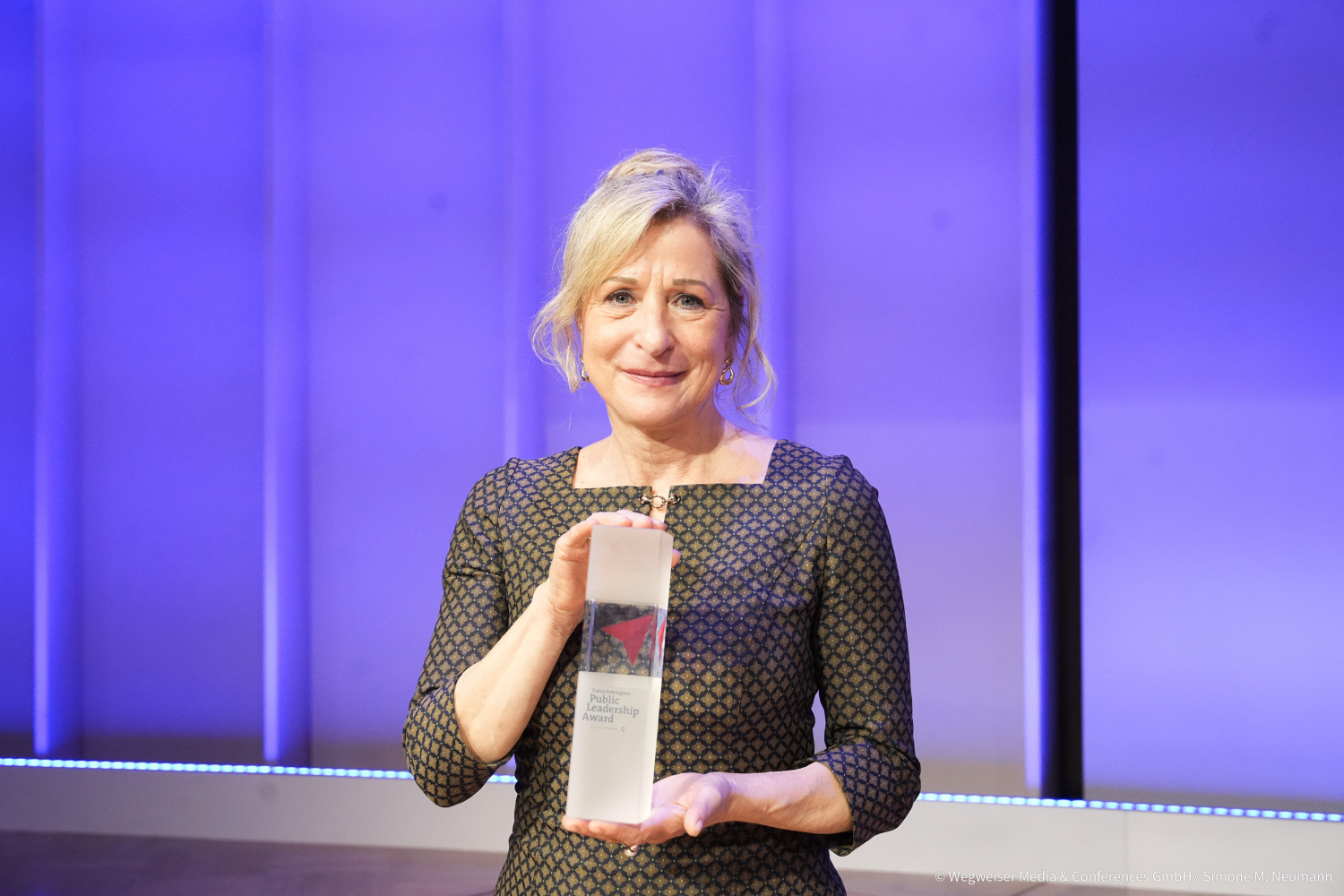
Under the leadership of District Administrator Dagmar Schulz, the establishment of a Digitalisation Unit and the introduction of professional process management have laid important foundations for the modern development of the local government in Lüchow-Dannenberg. With a strong spirit of innovation, she is driving forward the integration of
artificial intelligence, robotic process automation (RPA) and virtual reality (VR) in order to reduce the workload on staff and improve public services in the long term. Her trusting and supportive leadership style contributes significantly to the success of the projects and to a positive working environment.
DiPlanung, Free and Hanseatic City of Hamburg & Digital Building Permit, Ministry of the Interior and Construction of Mecklenburg-Western Pomerania
Award for secure (digital) infrastructures and the public IT landscape
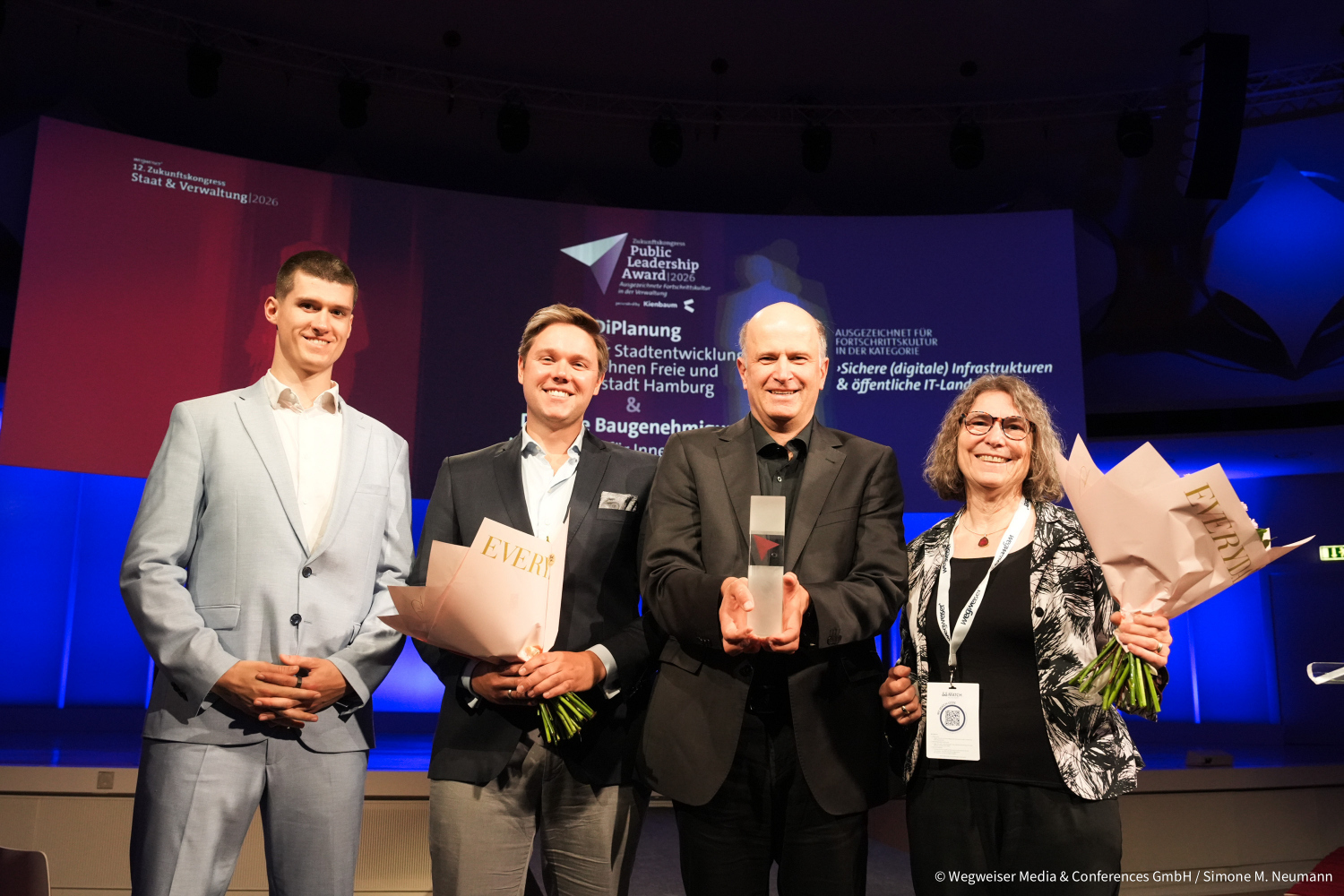
DiPlanung – the comprehensive, web-based solution for complete and integrated process management in urban land-use planning, regional planning and planning approval
The project aims to significantly speed up spatial planning and approval procedures through an AI-supported end-to-end platform based on the EfA solution DiPlanung. In collaboration with the BMDS, core network operators and eight pilot states, an interoperable platform – suitable for nationwide use – has been developed, featuring initial AI functions for automated completeness and plausibility checks. Since November 2025, the solution has digitally mapped the entire procedural process, strengthened security and trust through operation on a BSI-certified cloud infrastructure, and set new standards for the cooperative modernisation of federal and state administration.
The Digital Building Permit is a nationally established EfA flagship service in the field of Construction & Housing and is already in use in 13 federal states, with more than 85,700
active applications and hundreds of connected authorities. The solution was developed in collaboration with users, adapted to state-specific requirements
and is continuously refined based on ongoing feedback from applicants and case officers. In doing so, it not only creates a harmonised digital application landscape across state borders, but also a strategically usable infrastructure for the implementation of further digital administrative services.
Leadership with its own leadership philosophy, Bavarian Medical Service
Leadership Award
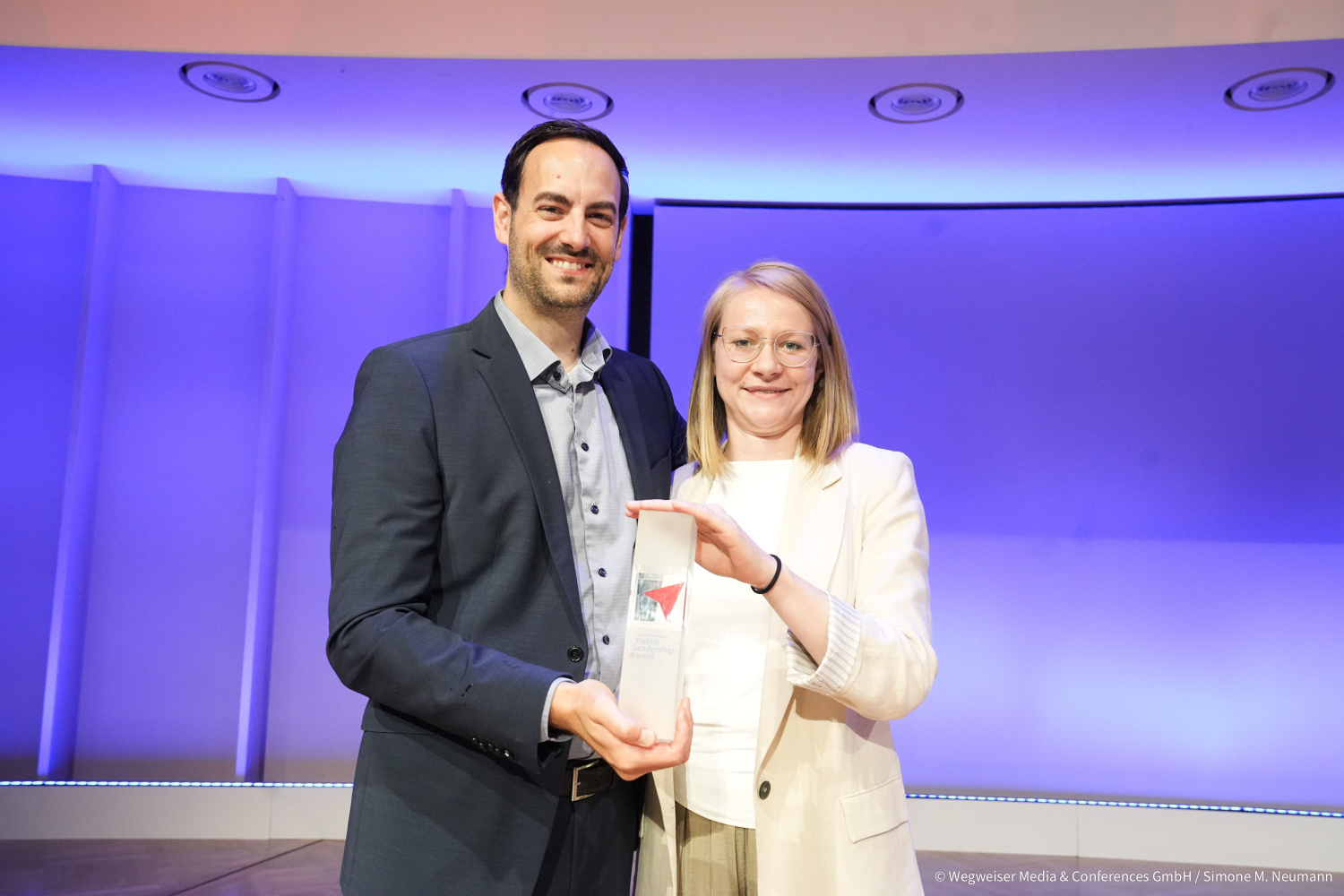
Since 2023, the Bavarian Medical Service has been consistently developing its leadership culture on the basis of a leadership mission statement drawn up in collaboration with its staff, and is embedding this within the organisation in the long term through initiatives such as leadership cafés, training courses, coaching sessions and an annual leadership summit. This ongoing development is complemented by regular evaluations and, from 2026, by individual assessment and development centres for all managers. The positive effects are evident in a strengthened organisational culture, low staff turnover and fully staffed positions – key prerequisites on the path to becoming a modern healthcare provider and an attractive employer.
Training Change Makers – Systematically integrating future-oriented skills into public administration training, Darmstadt University of Applied Sciences
Award for Future Skills
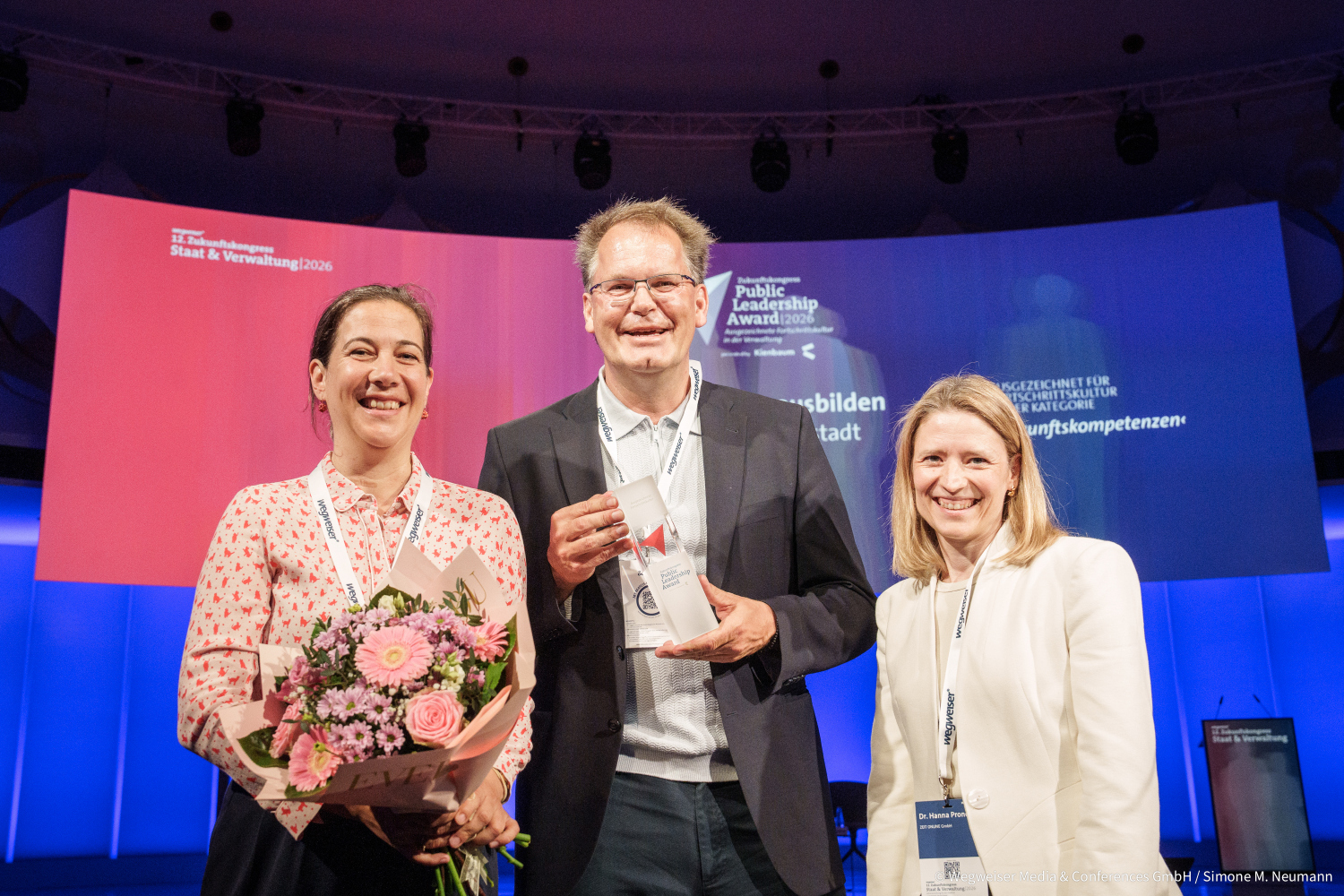
The Public Management (B.Sc.) degree programme at Darmstadt University of Applied Sciences specifically prepares future public administration professionals to jointly shape digital and socio-ecological transformation, and equips them with future-oriented skills as an integral part of their training. Through the close involvement of local government leaders, transdisciplinary teaching formats and practical projects with local authorities, students acquire skills in digital administrative design, systemic thinking, cross-sectoral collaboration and dealing with uncertainty. As a model that is so far unique in Germany, the degree programme provides a transferable approach to modernising administrative training and the sustainable development of skills in the public sector.
AI Taxation – AI-assisted identification of low-risk tax returns, Tax Administration of the State of North Rhine-Westphalia
Award for Future Technologies
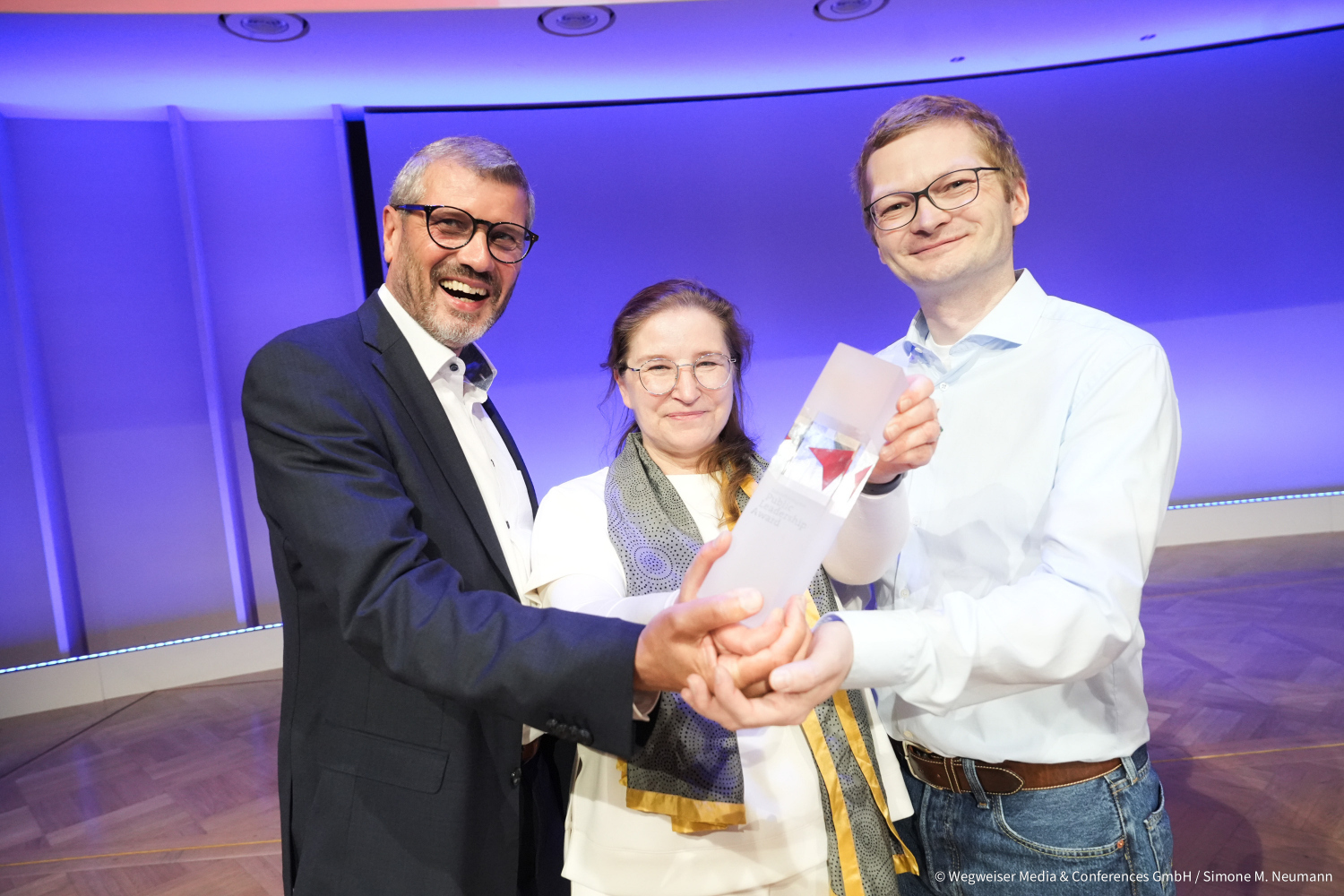
An AI-powered solution for identifying low-risk income tax returns enables faster tax refunds for citizens and reduces the workload for tax authorities in high-volume processing. To this end, the tax authorities in North Rhine-Westphalia are using artificial intelligence within their existing risk management system to recognise low-risk tax returns more accurately and to identify them on the basis of domain-specific expertise, machine learning and statistical risk analyses, without leaving the technical decision to the system. The non-critical cases identified in this way are processed automatically, thereby reducing processing effort, queries and unnecessary review loops, whilst at the same time freeing up resources for more complex cases. Following a pilot scheme run by the North Rhine-Westphalia Regional Finance Directorate in selected tax offices, the AI module was rolled out across all tax offices in North Rhine-Westphalia in spring 2026.
2025 Award for Leadership and Culture in Public Administration
The Public Leadership Award was presented for the third time as part of the 11th Future Congress State & Administration under the patronage of the BMDS in collaboration with Kienbaum and Wegweiser. In 2025, awards were presented in these 5 categories:
- Change Maker I: Leadership
- Change Maker II: Human Resources & Future Skills
- Change Maker III: Future Technologies
- Public Leadership International Edition
- Award for Individual Public Leadership
The town of Papenburg with its project: Town Hall 5.0
Category: Change Maker I, Leadership
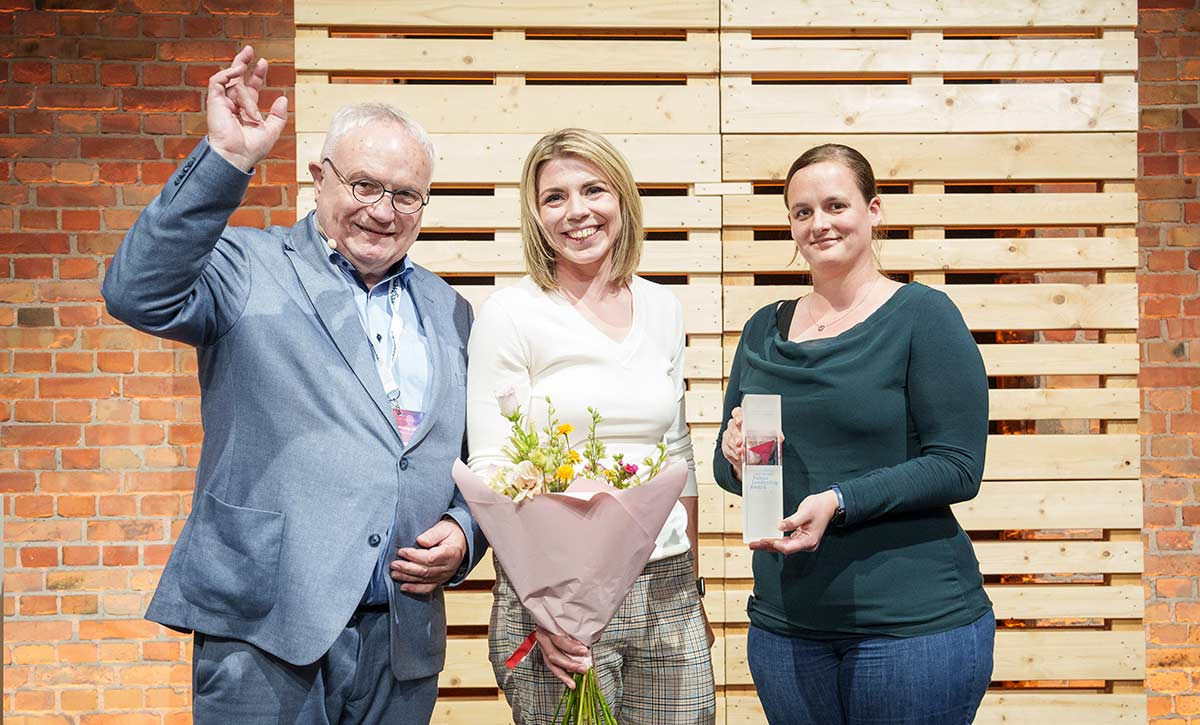
The city of Papenburg has consistently made digitalisation a key management priority – with a clear political mandate, strong administrative leadership and participatory development. The starting point was an interdisciplinary digitalisation unit reporting to the mayor, with cross-departmental influence. Digitalisation, organisational development and staff development are conceived and implemented jointly. Through flat hierarchies, dialogue-based formats and targeted empowerment, Papenburg has established a new leadership and working culture. Managers are supported through coaching, networks and learning initiatives. The binding strategic process emphasises clarity, participation and transparency, and embeds digital transformation as a city-wide priority.
The federal government’s DigitalService GmbH is working on the Work4Germany Fellowship project to build a sustainable state
Category: Change Maker II, Human Resources & Future Skills
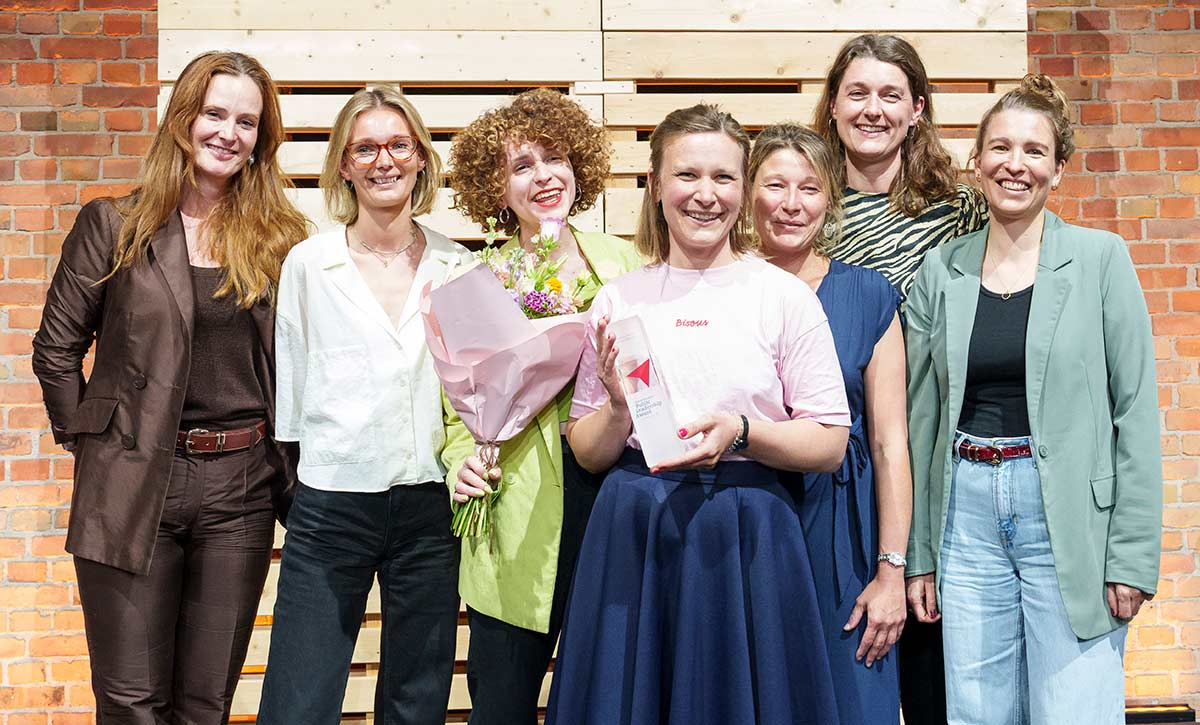
The Work4Germany Fellowship, run by the federal government’s DigitalService GmbH, has been promoting a modern working culture within the federal administration since 2020. The focus is on digital culture, collaboration and agile methods. External experts from the private sector – known as Fellows – work directly within administrative teams, challenge established routines and introduce new ways of working. In doing so, they help to embed innovative methods on a sustainable basis. The programme builds bridges between the civil service and modern working environments, promotes cross-departmental cooperation and
reduces silo thinking. It enables more effective processes and attracts new talent – many Fellows stay on long-term. The Fellowship programme focuses on skills development, user-centred approaches and personal responsibility.
The Free and Hanseatic City of Hamburg, the City of Leipzig and the State Capital of Munich with the project: Connected Urban Twins (CUT)
Category: Change Maker III, Future Technologies
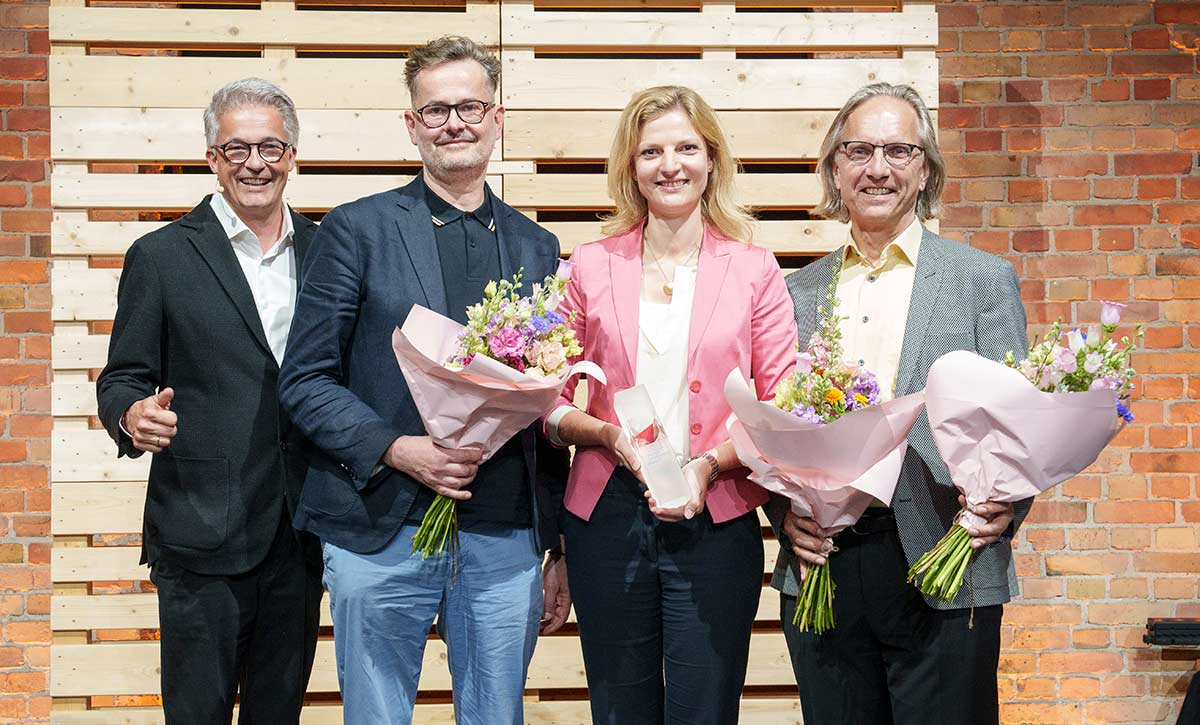
CUT is a joint project between the cities of Hamburg, Leipzig and Munich – the only one of its kind in Germany – which aims to establish urban digital twins as a tool for sustainable urban development. These virtual representations of real cities use geodata, real-time information and simulations to make planning processes more transparent and data-driven. CUT combines technological innovation with public participation: specialist departments, municipal agencies and citizens work together to develop solutions for climate, energy and mobility. Particular emphasis is placed on interoperability, open standards and open source. This enables the results to serve as a model for other local authorities. New governance structures and data protection concepts strengthen trust and transparency. CUT promotes the modernisation of public administration and the democratic co-creation of urban spaces – as a blueprint for the cities of the future.
Vorarlberg Regional Administration, Austria, with the project: #unserLandesdienst: Let’s stop being so modest!
Category: Public Leadership – International Edition
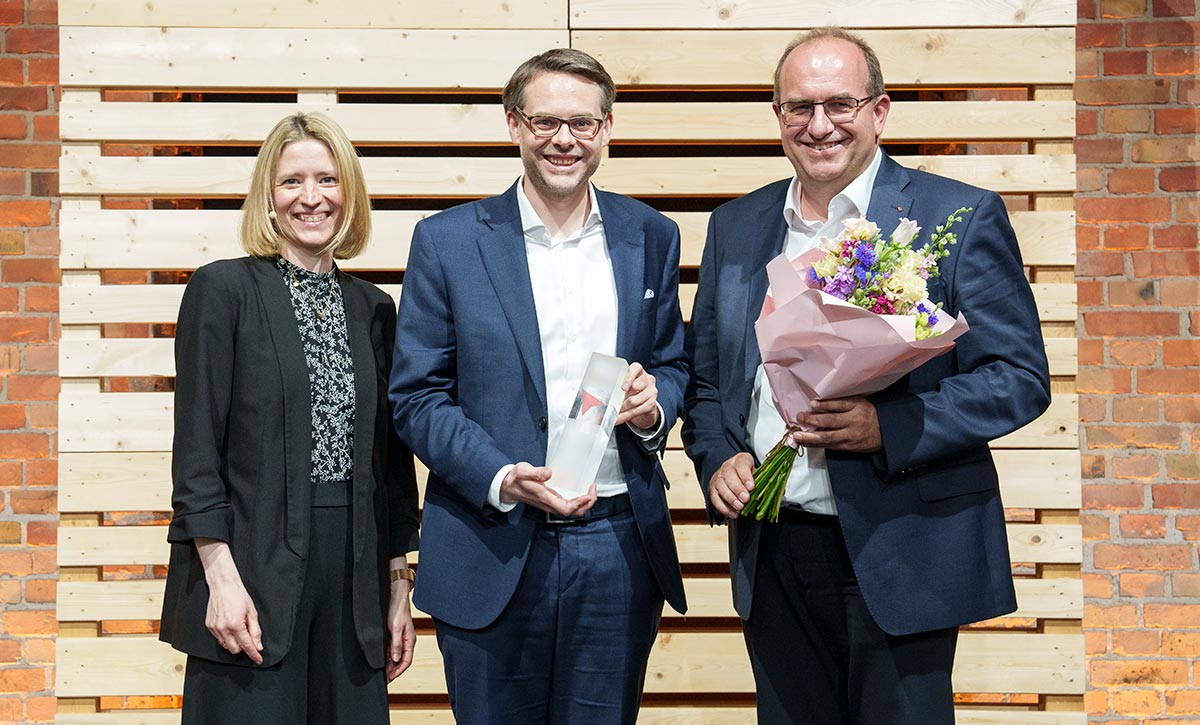
Through the #unserLandesdienst leadership initiative, the Vorarlberg State Administration has been driving an internal transformation since 2022 – with a new mission statement, clear values for collaboration and leadership, and a firmly established employer brand. The aim is to create a future-proof state administration that is an attractive, values-driven employer. Values such as diligence, appreciation and foresight have been widely agreed upon and implemented in a practical manner. The organisation is constantly evolving across three key areas: New Work & Digitalisation, HR Strategy and Administrative Innovation. Leadership is being strengthened, participation encouraged and structures adapted. The results: greater satisfaction, a better leadership culture and a stronger sense of identification with the provincial civil service.
Dirk Schrödter, Minister for Digitalisation (Head of the State Chancellery of Schleswig-Holstein)
Award for Individual Public Leadership
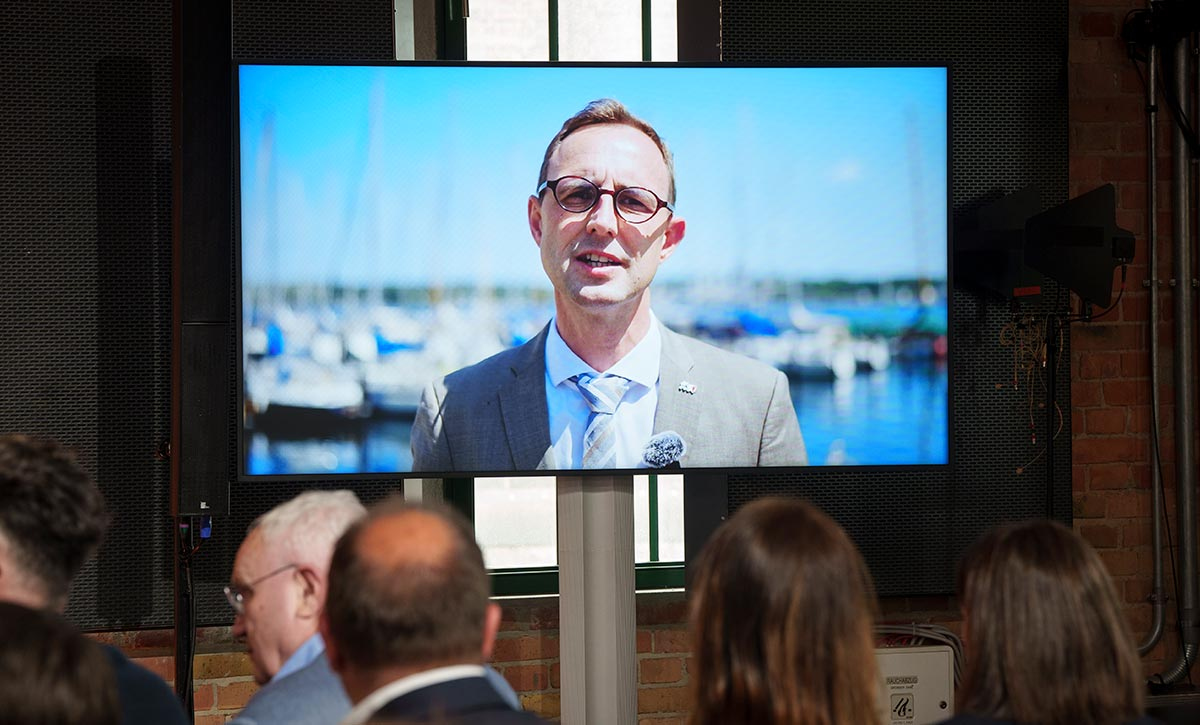
Dirk Schrödter, Head of the State Chancellery, has consistently made digital sovereignty, open source and open innovation key priorities of his leadership. With a clear strategic focus and many years of dedication, he has developed Schleswig-Holstein into a national pioneer in digital resilience and independence. Under his leadership, an open-source strategy has been established which is not only having an impact at state level but is also attracting international attention. Particularly noteworthy is his ongoing dialogue with other public administrations, which fosters knowledge-sharing, strengthens networking and facilitates cooperation.
2024 Award for Leadership and Culture in Public Administration
The Public Leadership Award was presented for the second time as part of the 10th Future Congress State & Administration under the patronage of the BMI in collaboration with Kienbaum and Wegweiser. In 2025, awards were presented in these 5 categories:
- Leadership & Digital Transformation
- Leadership & Digital Transformation for Europe
- Leadership & Innovative Working Environments
- Leadership & Diversity
- Leadership & Resilience
AI-based accident prevention from BG BAU
Category: Leadership & Digital Transformation
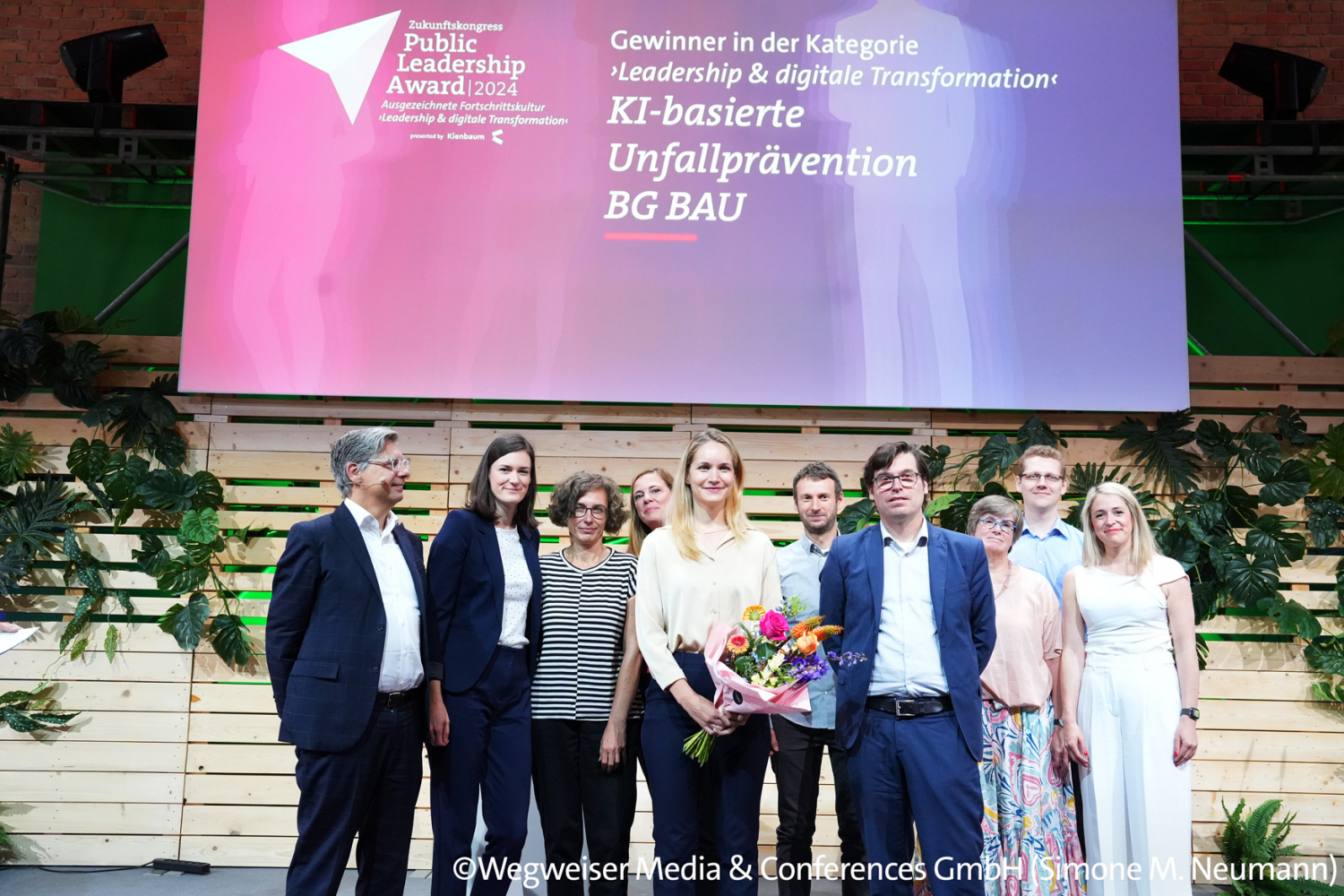
The flagship project “AI-based support for targeted accident prevention”, funded by the Federal Ministry of Labour and Social Affairs, was launched on 16 February 2023. Even now, before the project ends on 16 June 2024, it is fair to say that the project has been successfully implemented. Within the first nine months, the project team used an agile approach to set up an AI platform for the first time, develop an AI model and make this available to the inspectors at BG BAU. Since 4 December 2023, the AI application has been providing supervisors with valuable support in their prevention work.
Linz City Council Digital Initiative
Category: Leadership & Digital Transformation for Europe
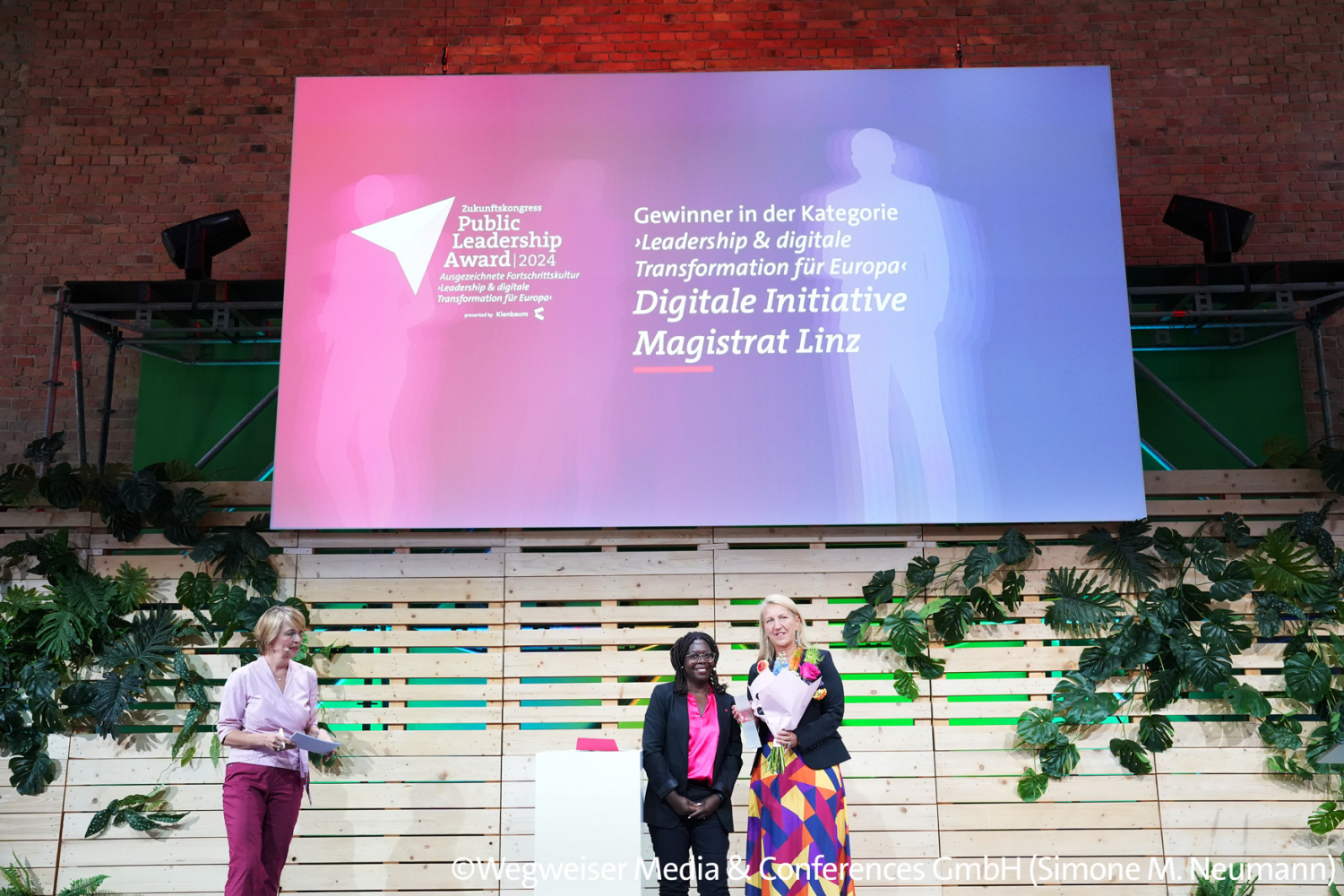
Under the leadership of Mag. Ulrike Huemer, targeted measures are being taken as part of the “Digital Linz” programme to make the city a digital pioneer in the region. Digital transformation affects all levels of the administration and promotes collaboration between departments. An open culture of communication is fostered through digital and interactive town hall meetings, monthly newsletters and the city’s own podcast. Engaging with artificial intelligence is an integral part of the organisational strategy. AI transformation is regarded as part of the City Council’s DNA and is reinforced through training sessions, specialist talks and a group of pioneers who identify potential areas of application and develop specific projects.
re@di – regional.digital, comprising the eight major district towns of Bretten, Bruchsal, Bühl, Ettlingen, Gaggenau, Rastatt, Heinstetten and Stutensee, as well as the urban district of Baden-Baden
Category: Leadership & Innovative Working Environments
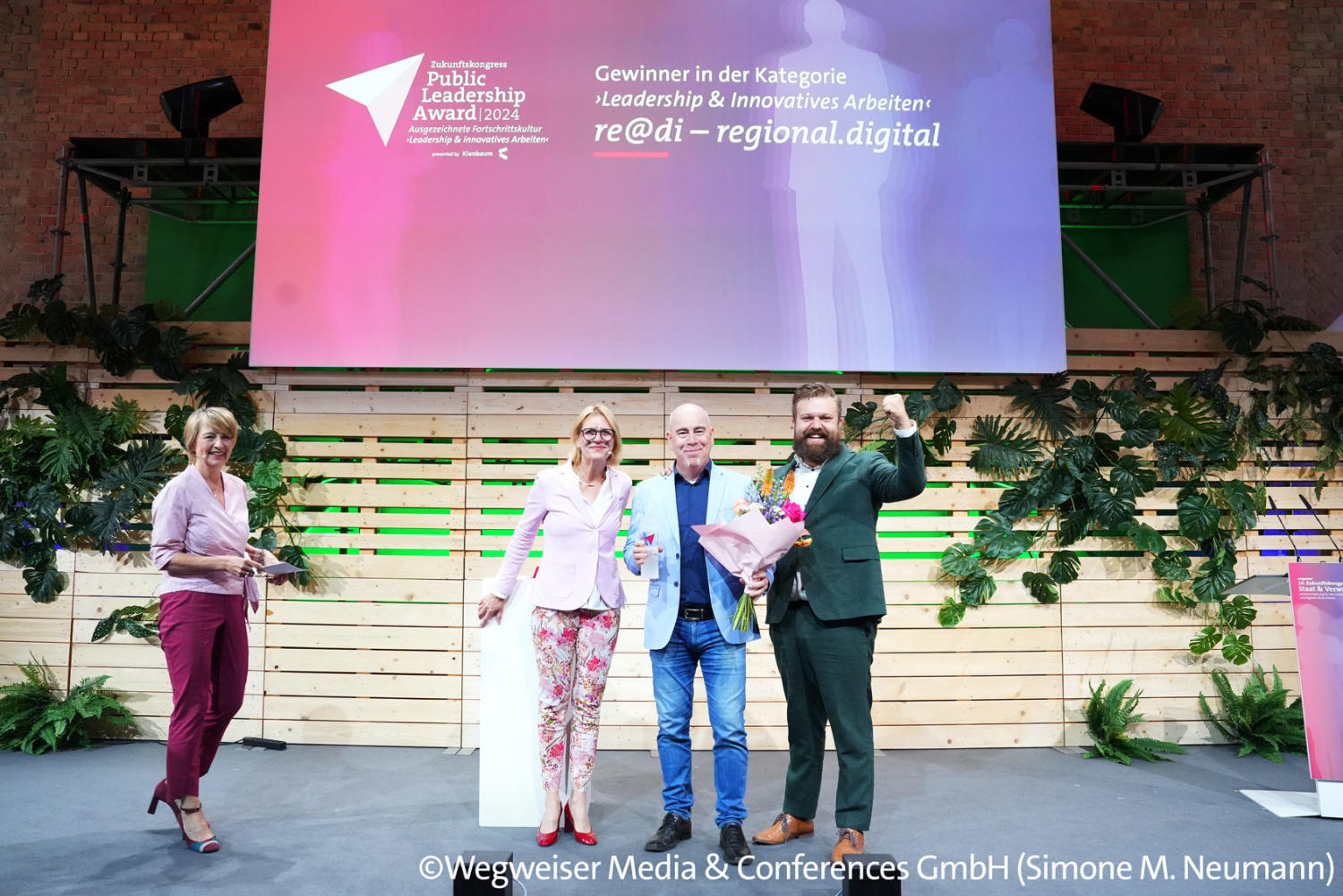
re@di is a local partnership between nine towns in Central Baden. They work across municipal boundaries, departments and hierarchies, promote personal responsibility through self-organisation, and create spaces where participants can ‘just get on with it’ with as little red tape as possible. Over 80 people are involved in the partnership with the aim of driving forward digitalisation within the local authorities. To this end, they have collaboratively developed a statement of intent underpinned by a sustainable organisational structure: the expert group sets the strategic direction, whilst projects are implemented in specific areas of action within the project groups. The success speaks for itself: over the past five years, they have launched many flagship projects, as well as small, innovative ones: for example, the engagement platform funded by the State of Baden-Württemberg, the Open Region Mittelbaden, their own open-source-based online collaborative platform, and the joint transparency portal. However, it is above all the ‘re@di spirit’ that unites them: the shared determination to forge ahead and shape digitalisation despite bureaucracy and federalism.
WIN WoMen* Impact by the Free and Hanseatic City of Hamburg
Category: Leadership & Diversity
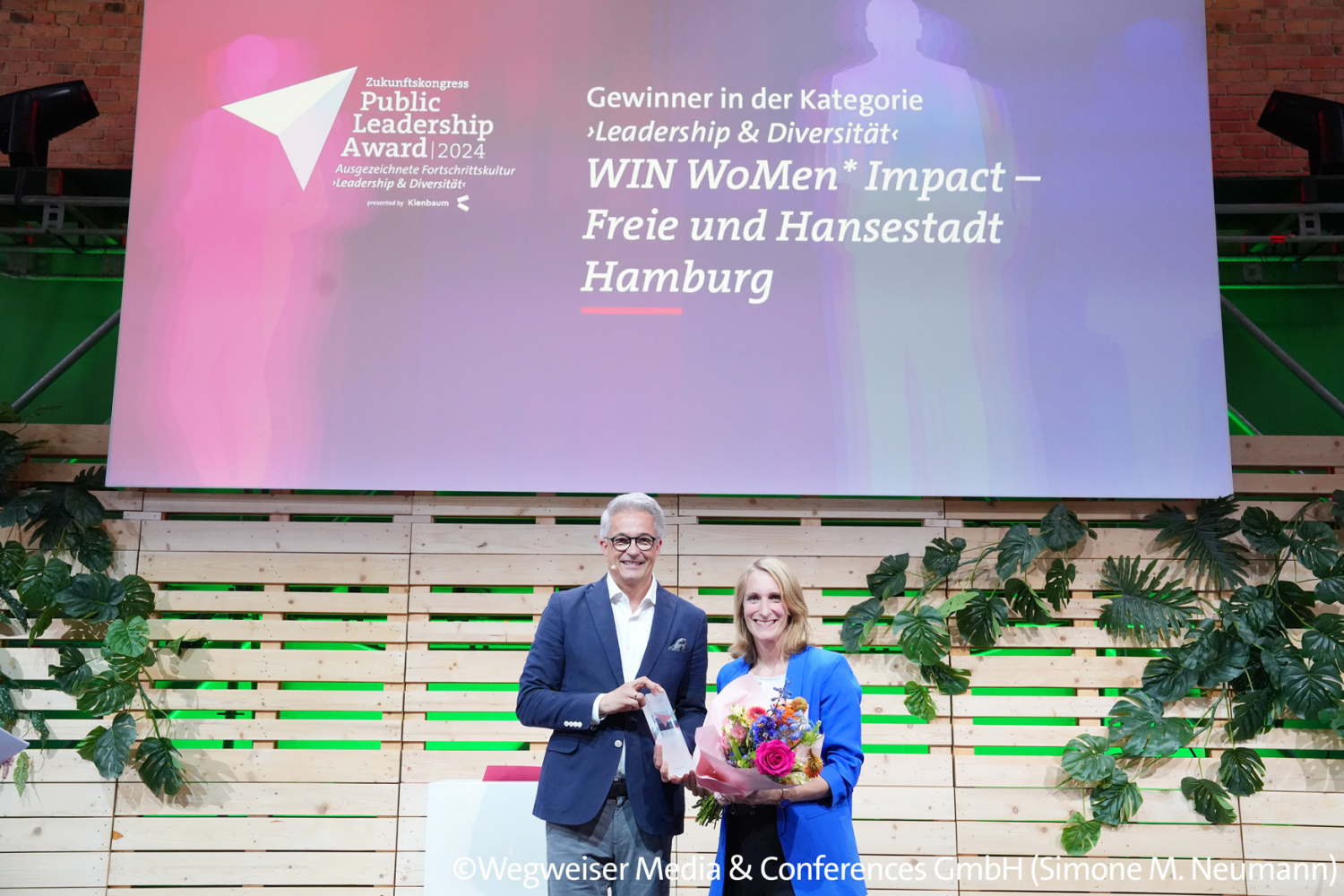
WIN* is a network that spans all Hamburg’s public authorities and public enterprises, and has set itself the aim of improving gender equality at every level within the Free and Hanseatic City of Hamburg (FHH) and the municipal economy, and to drive cultural change. The aim is to offer everyone the same opportunities for professional development and fulfilment. WIN is a source of inspiration, encouragement and empowerment for all those who wish to get involved within the FHH. Through mutual exchange and networking, WIN promotes initiatives and active participation in achieving a shared, overarching goal. This self-organised approach, which transcends administrative boundaries and hierarchies, strengthens the organisation from within and enhances staff satisfaction.
Digital administration by the Federal Criminal Police Office
Category: Leadership & Resilience
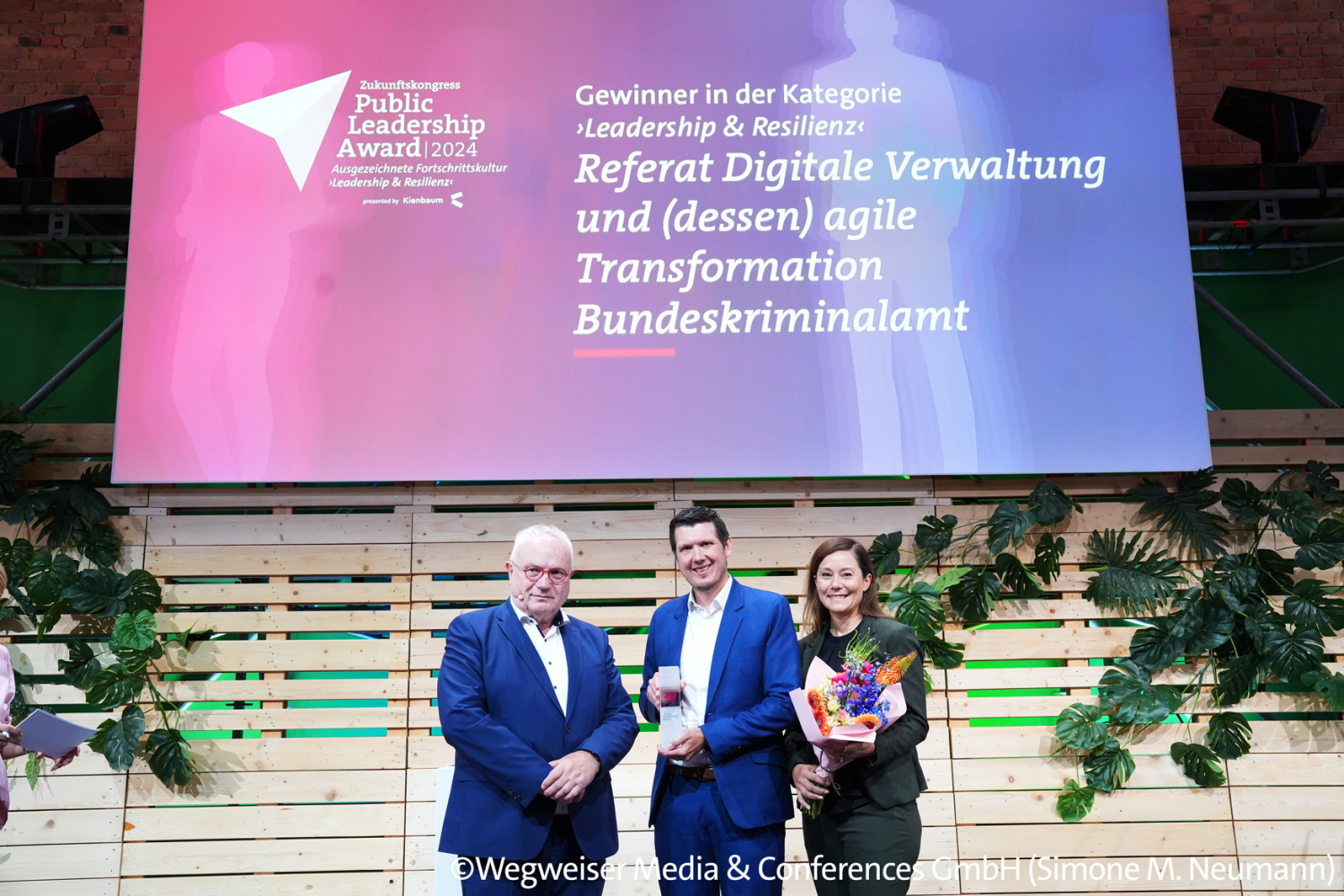
Through its project to digitise the administration of the Federal Criminal Police Office, the organisation is responding to rapidly changing issues and contributing to the development strategy for future-proofing, working methods and responsiveness. This approach makes the work more attractive, reduces staff turnover and helps tackle the shortage of skilled workers, as new staff can be quickly integrated by the whole team and those leaving do not leave a gap. It combines the following key elements: agile working, agile project management, leadership on an equal footing based on trust, and constant transparency and communication.
2023 Award for Leadership and Culture in Public Administration
The Public Leadership Award was presented for the first time as part of the 9th Future Congress on State & Administration under the patronage of the BMI in collaboration with Kienbaum and Wegweiser. The award recognises outstanding cultures of progress within public administration, thereby raising their profile as a mark of recognition and an incentive for others.
With the aim of promoting progress, creating incentives and encouraging individuals, teams and departments that are already embodying progress, awards were presented in four categories within public administration.
- Federal Government & Justice
- Federal States
- Local Authorities
- Social Security
The award criteria are based on the model of a culture of progress as described in the study: ‘Progress, a New Era and State Functionality – Leadership & Culture in Public Administration in a New Era” as described. Kienbaum produced the study last year with the support of Wegweiser Research & Strategy GmbH.
The public has voted: here are the winners of the 1st Public Leadership Awards!
Frankfurt am Main Magistrates’ Court / Hanau District Court
Winner in the Federal Government & Justice category
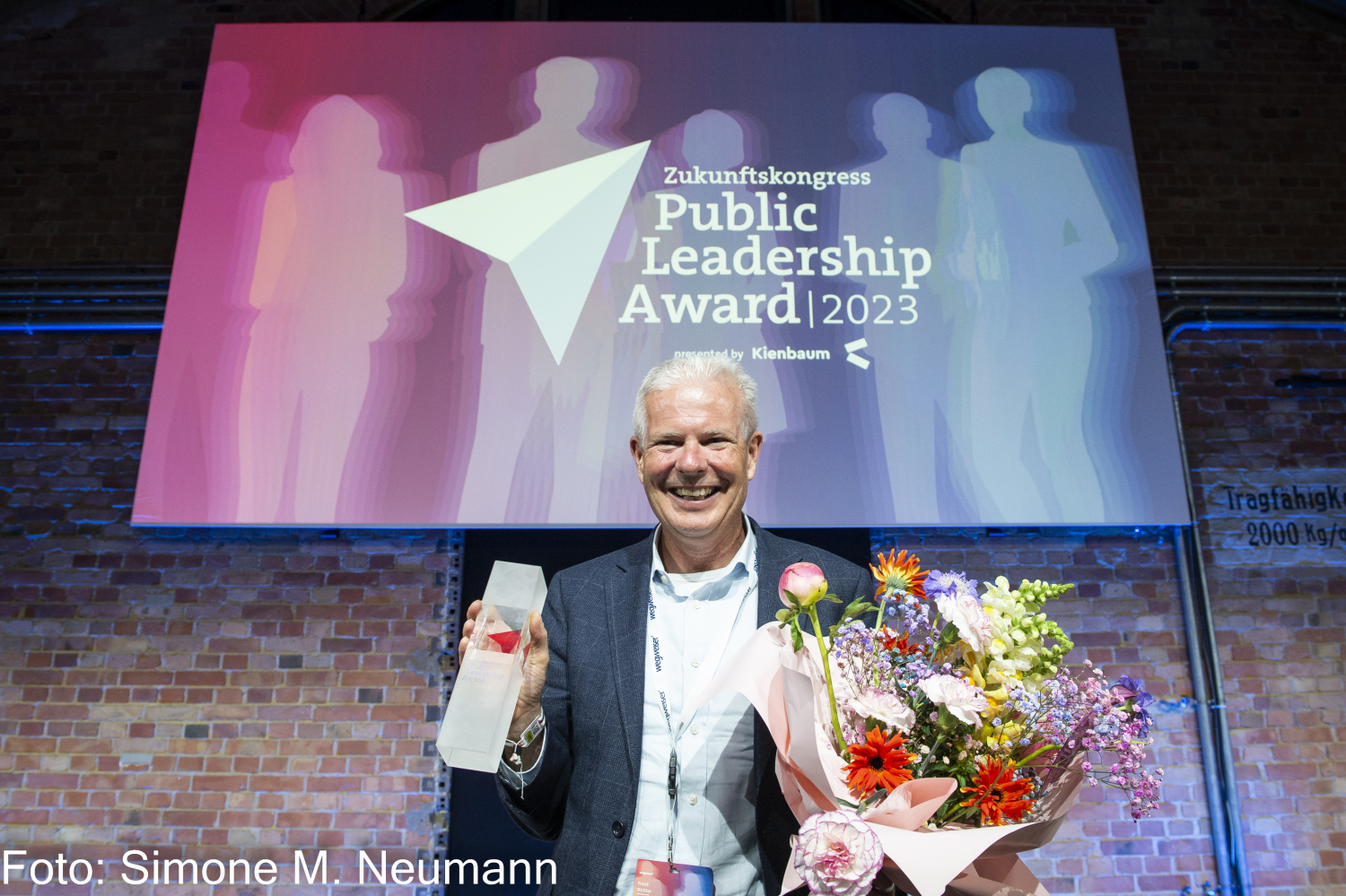
FRAUKE (FRankfurt’s Electronic Judgement Configurator) is the first judge’s assistance tool in Germany to utilise AI to assist in the judgement-making process. The project enables the judiciary to deliver high-quality and swift decisions in mass litigation scenarios. Despite individual judges handling caseloads of up to 1,000 cases per year, such an application allows the judiciary to administer justice swiftly. Civil society benefits from swift civil proceedings resulting in well-reasoned judgements. For judges, the workplace becomes more attractive, as AI applications can make better use of the possibilities offered by electronic case files.
City of Cologne Expert Group on ‘Areas Requiring Particular Attention’
Winner in the Local Authorities category
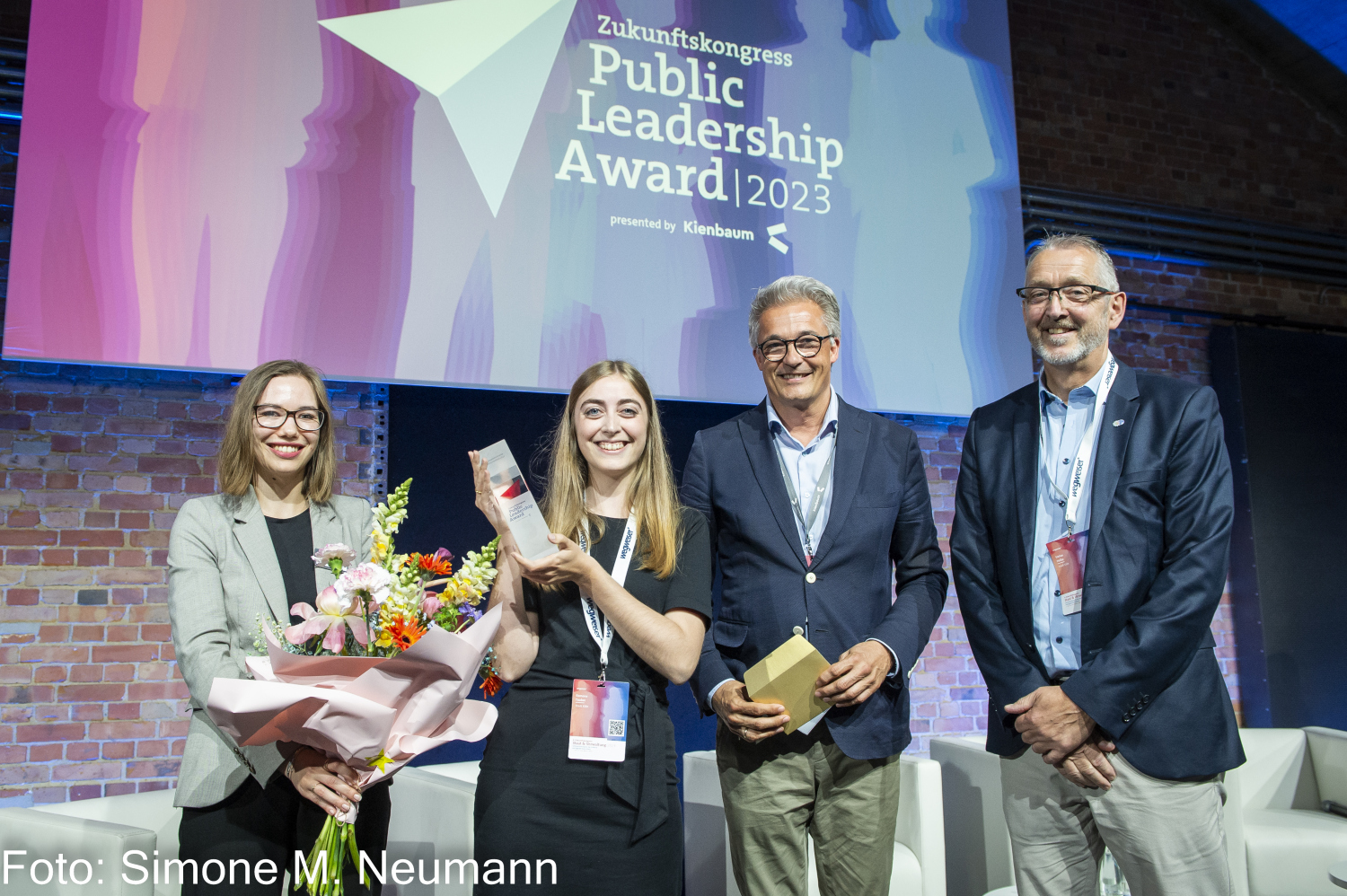
The City of Cologne addresses safety-related prevention work from a city-wide perspective through its political body, the ‘Crime Prevention Council’ (KPR). This also includes ensuring the safety of the many different high-traffic public spaces within the city. As improving safety and the quality of life in public spaces across the city concerns not only the city administration but also the public, positive results have already been achieved: within the expert group and the working groups, cooperation and communication between the city administration, the police and citizens’ representatives are a particularly significant factor in the implementation of the measures. A large network, as well as the distribution of responsibility for implementing the measures across various municipal departments, are key reasons why the expert group and its working groups function so effectively.
NRW project ‘Zukunft Bundesbau’ (NRW Building and Property Management in collaboration with the Regional Finance Directorate for North Rhine-Westphalia)
Winners in the ‘Countries’ category
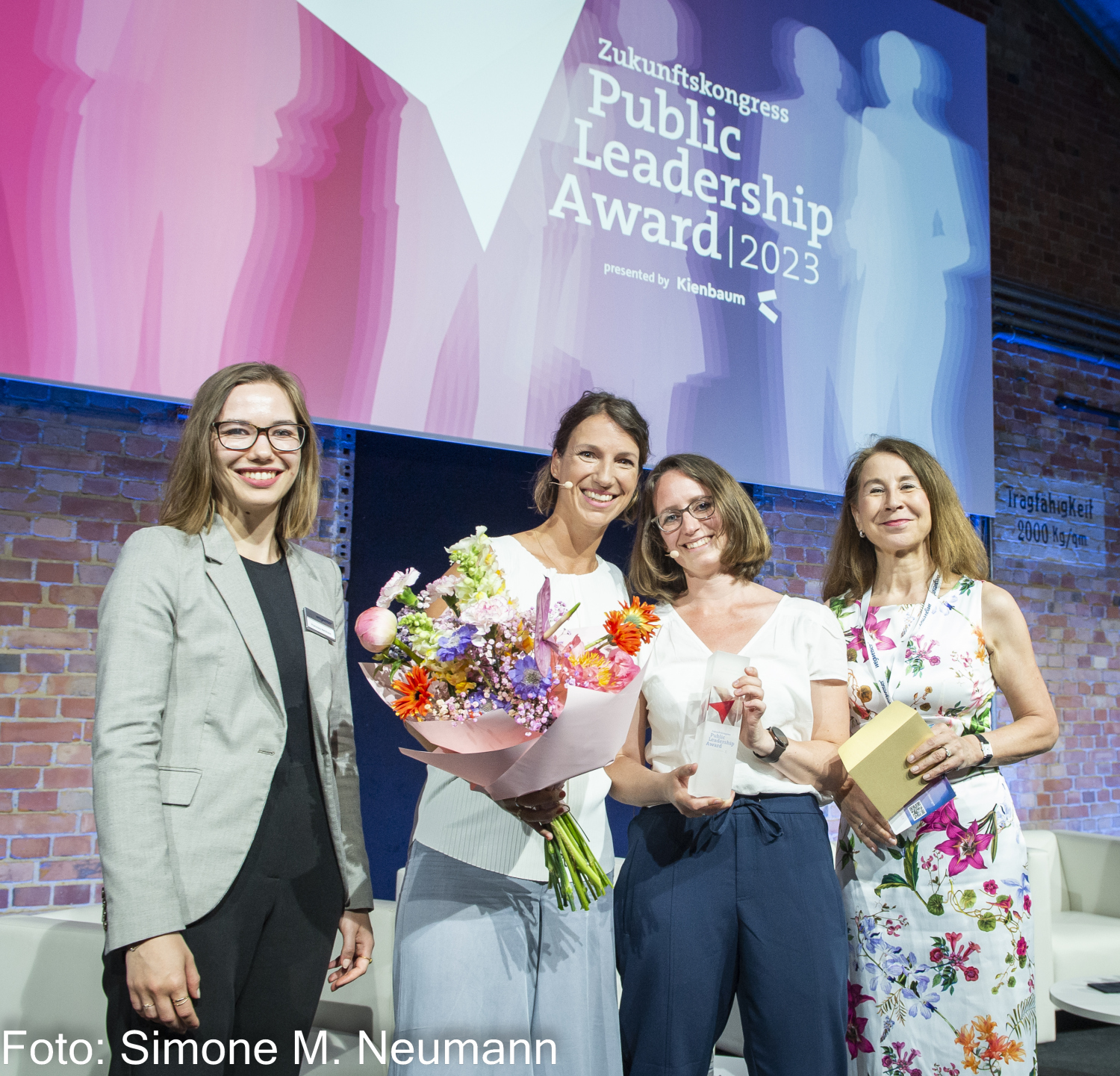
“A team doesn’t need rigid hierarchies, but clear roles!” – that was the project’s starting premise. If the Federal Building Authority in North Rhine-Westphalia is to overcome the challenges of the coming years, people need a new mindset when it comes to working together: no rigid hierarchies, but clear roles. No bureaucratic procedures, but enthusiasm for collaboration. No ‘business as usual’, but working together to ensure the success of construction projects. No IT initiatives undertaken in isolation, but a shared, accessible IT system that transcends organisational boundaries. Federal construction makes an important contribution to upholding democracy, security and climate protection. Ultimately, ‘Zukunft Bundesbau’ benefits society. Federal construction projects are planned and built efficiently and purposefully. The requirements for climate-neutral federal building authorities can be met more effectively. Lean administrative structures ease the burden on the public purse. For these reasons, the project was named ‘ZUKUNFT Bundesbau’.
DRV Federal Office – Digital Strategy and Digital Transformation Team
Winner in the Social Security category
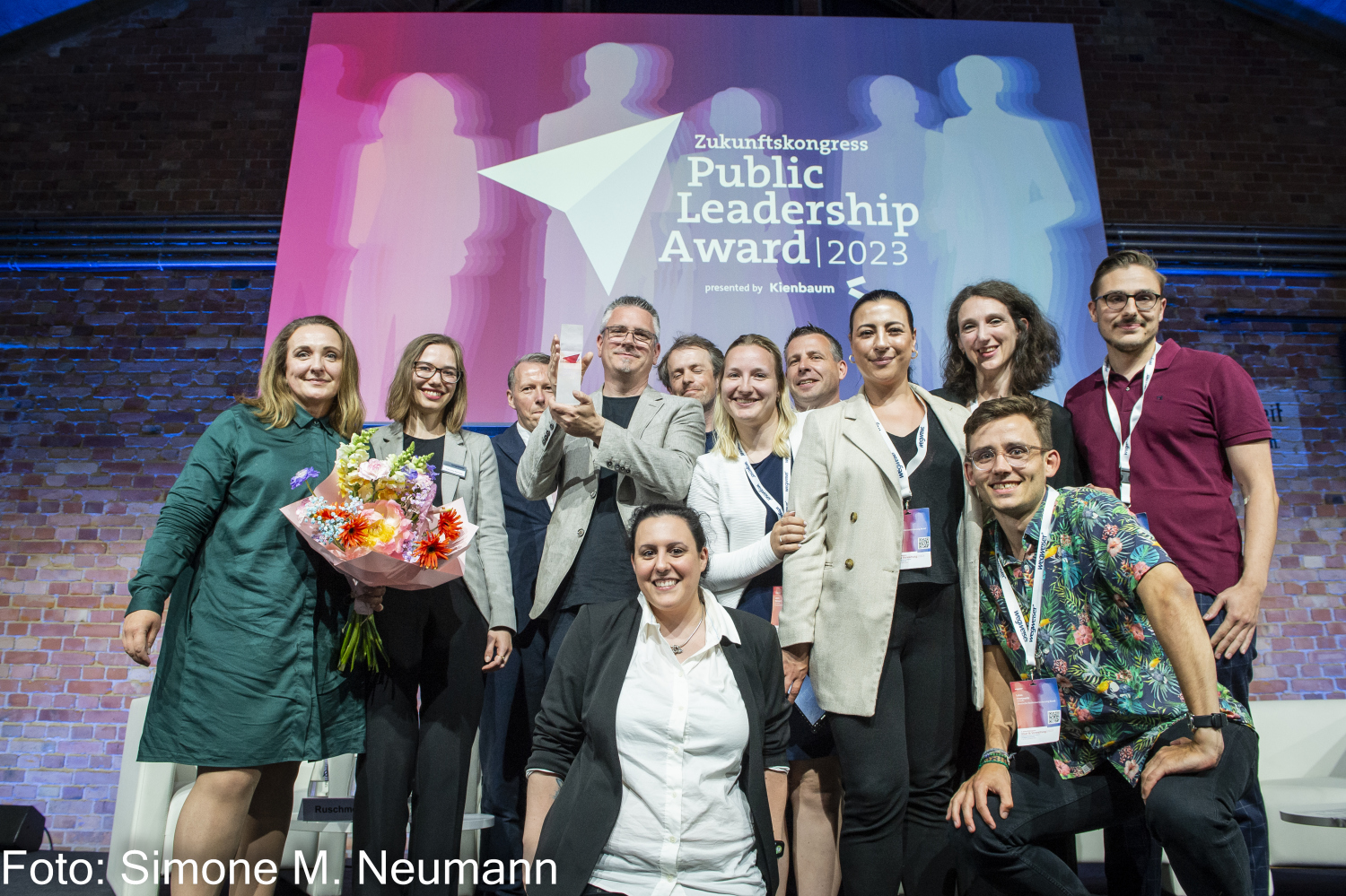
Since its launch in 2020, the ‘Digital Strategy and Digital Transformation’ team has set itself the task, within the DRV Bund – the largest provider of German pension insurance – to set things in motion and drive digitalisation forward in the long term, using unconventional approaches. To this end, a team has come together around Chief Digital Officer Matthias Flügge, comprising digitalisation experts, innovation facilitators, process optimisers, programmers and administrative professionals keen to shape the future. The DRV Bund’s digital strategy serves as the compass for this journey into the digital future. The team conveys a vision of collaborative digitalisation with and for the citizens of Germany. In particular, courage, patience, willpower and perseverance were taken into account in the award decision. Through new forms of collaboration, boundaries between areas of responsibility are being overcome and the digital transformation is being proactively shaped together with staff across departments and divisions.
That was our shortlist for 20 June 2023!
The jury had made its selection: this was our shortlist for the evening of 20 June 2023. Awards are presented in four categories: Federal Government and Justice (combined due to their thematic connection), State, Local Government and Social Security. Of the eight nominations on the shortlist, four were awarded the 1st Public Leadership Award following a live vote at the 9th Future Congress on State & Administration.
Category 1: Federal Government & Justice
|
Category 2: Federal States
|
Category 3: Local authorities
|
Category 4: Social Security
|