Let’s tackle the challenges of digitalisation in public administration together, through research and practice!
The Science Dialog is a funding programme for research projects with outstanding practical relevance for the digitalisation of public administration.
Science Dialogue 2024/2025
(The Science Dialog was redesigned in 2024. Information on the previous format can be found on the NEGZ website at Science Dialog 2023.)
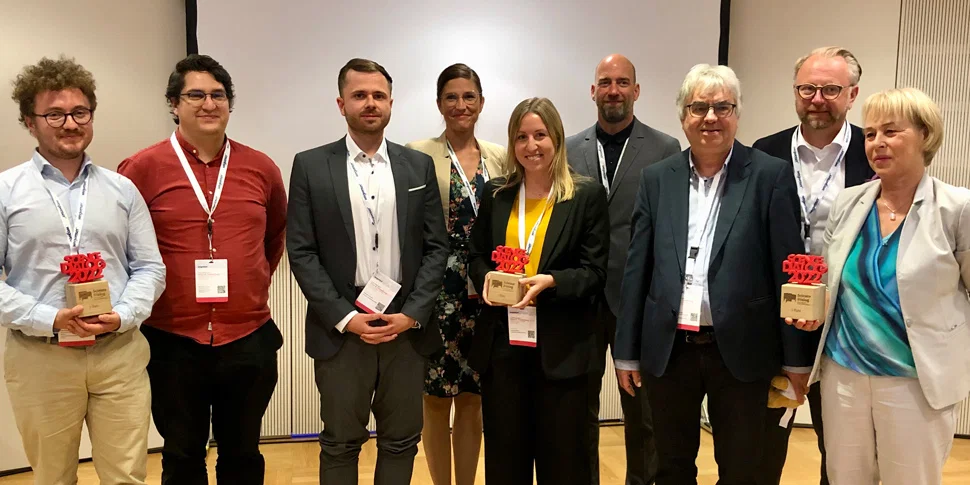
Winning team: Prof. Dr Alex da Mota Pedrosa & Prof. Dr Jochen Beutel (FHVD)

Is the digitalisation of public administration worthwhile? Working together towards a practical cost-benefit analysis
The dialogue process focuses on a practical issue of great relevance to public administration: How can the cost-effectiveness of digitalisation measures in German public administration be determined in a realistic, well-founded and, above all, practical manner?
Different perspectives are brought together in a structured yet open-ended exchange between specialists and senior managers from public administration, local authorities and academia. The focus is on a joint discussion of the following topics in particular:
- How practical is the cost-effectiveness analysis (WiBe 5.0) of digital services currently used by the public administration?
- How can we build on the sound approaches of the WiBe 5.0 technical concept to provide even more specific support in decision-making processes relating to digitalisation projects?
The aim of the dialogue process is to address a specific challenge in administrative practice in a focused and pragmatic manner. In this way, a shared understanding is developed, key issues are identified and practical impetus is generated for the further strategic and operational implementation of digitalisation measures – thereby creating significant added value for administrative practice.
Science Dialogue 2023
1st place
Where are we heading, tax authorities?
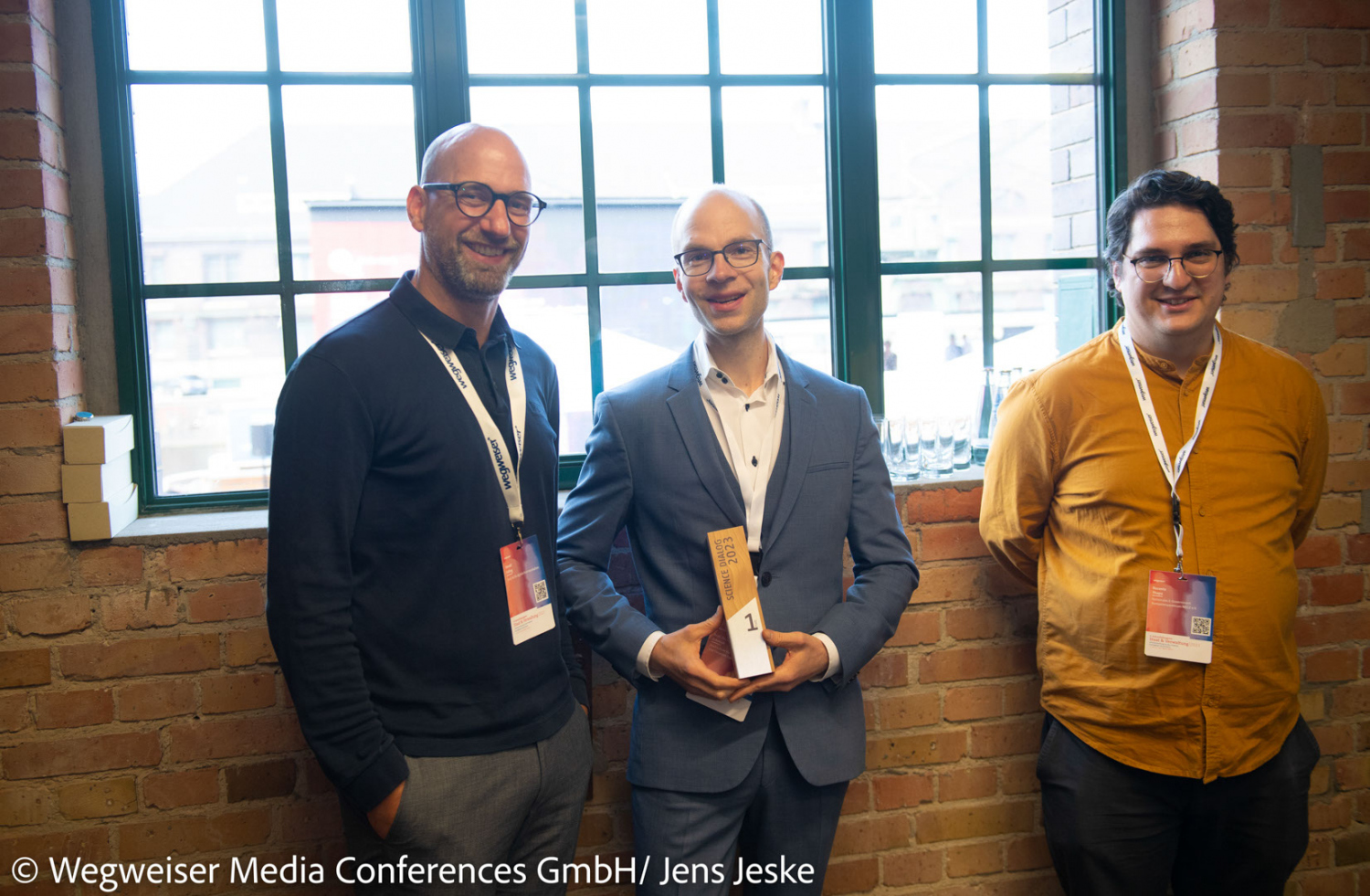
The potential and challenges of the future use of artificial intelligence (AI) have been analysed. Drawing on the distinction between front and back office, as well as between decision support and decision automation, the latter two areas are examined in detail. These could play a key role in the review of tax returns and the assessment of tax, which would bring about a positive, far-reaching change to the taxation process.
2nd place
Tax law adapted to the digital age
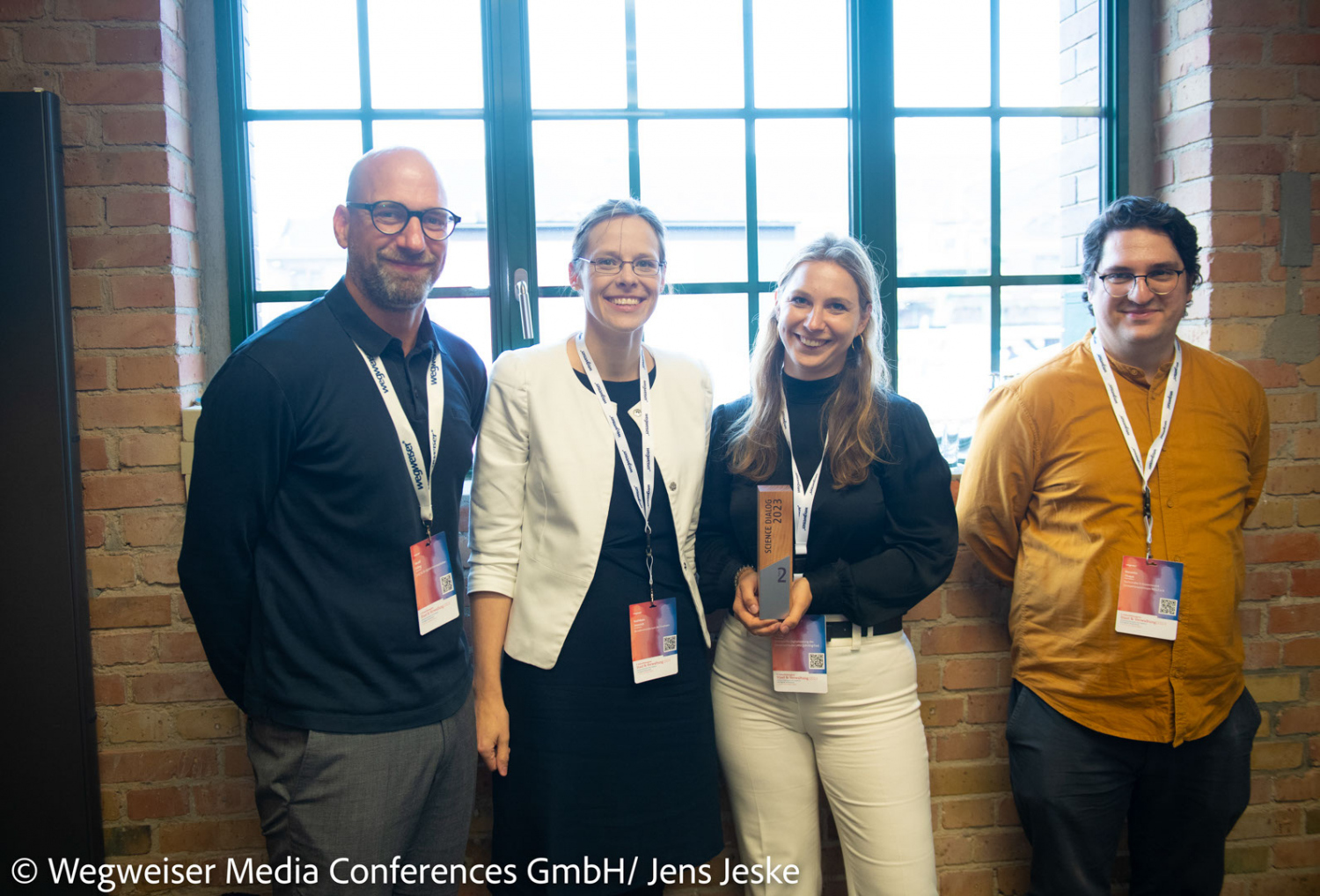
There have been increasing calls recently to translate laws written in a form that humans can understand into a form that machines can understand. As there is no rule-based form of law, legal texts cannot be translated 1:1 into code. These discrepancies lead to a disconnect between the legal text and the code. This, in turn, results in a lack of legal certainty. The aim of the project is to develop concepts that create tax law which is comprehensible to both humans and machines
3rd place
Promoting data literacy
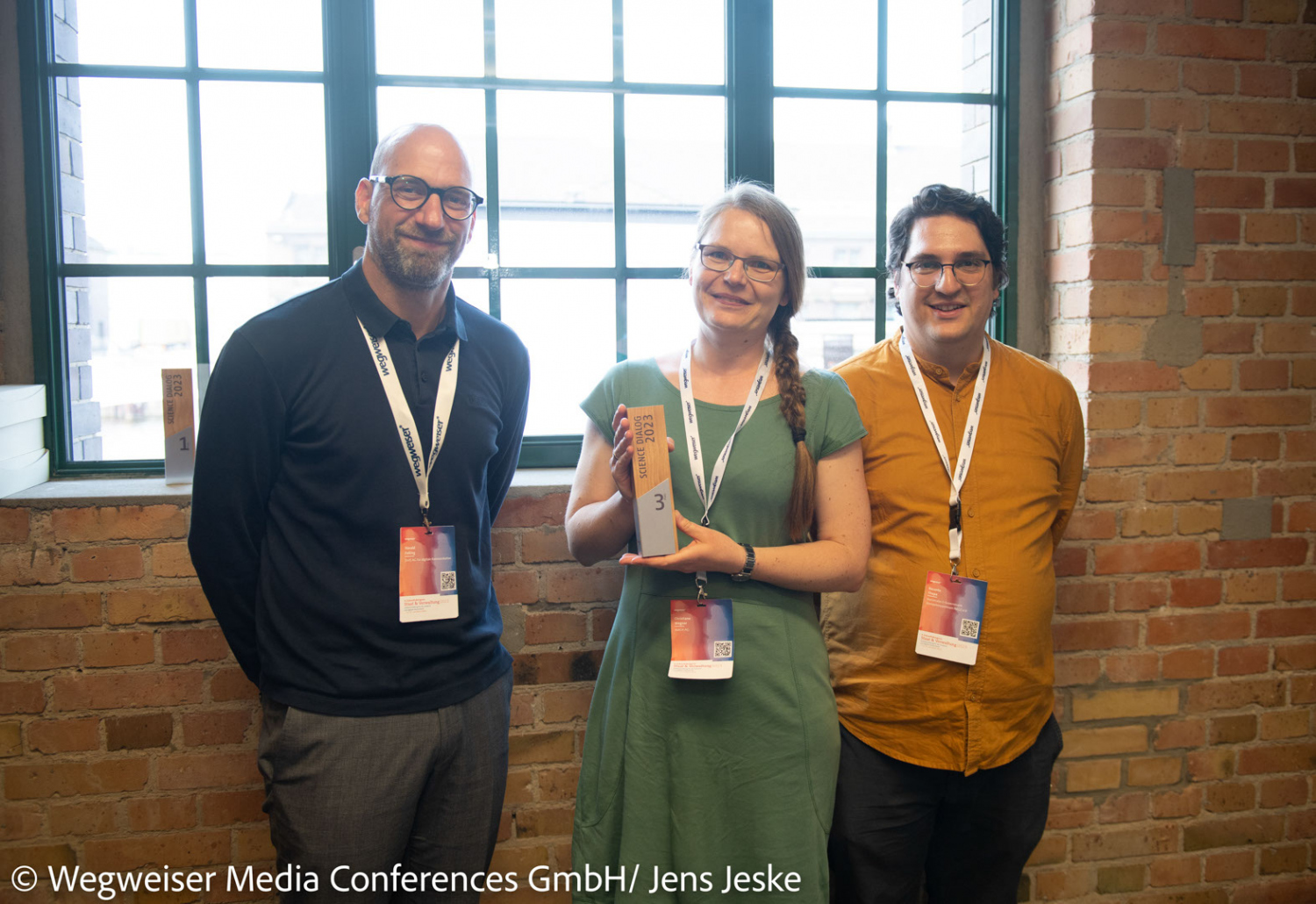
To participate in digital services on their own terms, users need to be in full control of their data. Public authorities can set an example of transparency here and inform citizens about the sharing of their data. We have developed interactive applications for e-government services that show which data is collected and shared. Results show that this can increase awareness of data sharing between public authorities during administrative processes.
Science Dialogue 2022
“We cannot overstate how much we value the strong impetus provided by the scientific community. However, it is important that the focus remains on solving a real-world problem. To achieve this, we need a dialogue between the public administration and the scientific community, to which the Science Dialogue, amongst other initiatives, contributes.”
Luise Kranich, Head of the Federal and Federal-State Digitalisation Programmes Unit at the Federal Ministry of the Interior (BMI)
“Creative and innovative ideas can accelerate the digital transformation. The submissions to the Science Dialogue and the winning projects demonstrate, across a broad spectrum, the potential that lies in research contributions. The purpose of the Science Dialogue is to harness this potential for use in administrative practice.”
Harald Felling, CEO of init AG
1st place

Vera Spitzer
Wissenschaftliche Mitarbeiterin
Institut für Wirtschafts- und Verwaltungsinformatik der Universität Koblenz

eGov-Campus – Modern professional development for modern public administration
Vera Spitzer from the University of Koblenz and Philipp Kuscher from the University of Potsdam are delighted to have won first place with their entry “eGov-Campus – Modern continuing professional development for modern public administration”. The continuing professional development platform for public sector employees, which teaches e-skills through Massive Open Online Courses, offers, in the jury’s view, enormous potential for modernisation.
2nd place

Dr. Brigitte Klamroth
Federführerin Hamburg, Programmverantwortliche Kommunikation & Abstimmung mit den Fachministerkonferenzen des Programms Gesamtsteuerung Registermodernisierung
Amt für IT und Digitalisierung, Senat der Freien und Hansestadt Hamburg – Senatskanzlei
Lutz Nentwig
Stellvertretender Geschäftsbereichsleiter DPS, Leiter Forschungsgruppe Fachprozesse und sichere IT-Infrastrukturen
Fraunhofer-Institut für offene Kommunikationssysteme FOKUS
Smart Assistant, make getting child benefit even easier!
Second place goes to the research and pilot project ‘Smart Assistant, make child benefit even easier for us!’, which is testing AI technologies in an administrative context. Dr Brigitte Klamroth, from the Senate Chancellery of the Free and Hanseatic City of Hamburg, and Lutz Nentwig from Fraunhofer Fokus accepted the award on behalf of the entire project team. The project is testing voice assistant technologies in the online service “Kinderleicht zum Kindergeld” (Child benefit made child’s play), which enables citizens to apply for administrative services relating to the life event of childbirth in a straightforward manner.
3rd place

Basanta Thapa
Nationales E-Government Kompetenzzentrum

Christian Weidner
Fraunhofer-Institut für Offene Kommunikationssysteme FOKUS
Open-source ecosystem for public administration
Basanta Thapa and Christian Weidner from the Centre of Excellence for Public IT have come third for their research project “Open-source ecosystem for public administration”. Using application scenarios, the work outlines a functioning ecosystem for free and open-source software within the German public sector.
Science Dialogue 2020
“In its second year, the Science Dialogue has established itself as a hub for innovation in the digitalisation of public administration. The current situation has shown us just how essential digital services and a non-bureaucratic approach by the administration are to overcoming the crisis. I am therefore delighted to recognise three outstanding initiatives that open up new perspectives for leaner processes and better public services.”
Minister of State for Digital Affairs Dorothee Bär
1st place
Lea Mayer
Deutsches Forschungszentrum für Künstliche Intelligenz GmbH (DFKI)

Nijat Mehdiyev
Deutsches Forschungszentrum für Künstliche Intelligenz GmbH (DFKI)

Oliver Gutermuth
Deutsches Forschungszentrum für Künstliche Intelligenz GmbH (DFKI)

Prof. Dr. Peter Fettke
Deutsches Forschungszentrum für Künstliche Intelligenz GmbH (DFKI)
Responsible AI – The use of artificial intelligence (AI) in public administration through explainable and fair AI methods
First place was won by Lea Mayer, Nijat Mehdiyev, Oliver Gutermuth and Prof. Dr Peter Fettke from the German Research Centre for Artificial Intelligence (DFKI) with their entry “Responsible AI – The Use of Artificial Intelligence (AI) in Public Administration through Explainable and Fair AI Methods”. Their concept for the responsible, transparent and socially just use of artificial intelligence technologies in public administration impressed the jury and the audience the most.
2nd place
Vera Spitzer
Wissenschaftliche Mitarbeiterin
Institut für Wirtschafts- und Verwaltungsinformatik der Universität Koblenz

Mobility in later life with the help of smart technologies
Second place went to Vera Spitzer and Elias Zervudakis from the E-Government Research Group at the University of Koblenz-Landau for the project “Mobility in old age with the help of smart technologies”. The project aims to provide long-term support to older people with reduced or limited mobility in the rural district of Cochem-Zell through a smart app that brings together transport services from various providers, such as public transport, taxi companies, volunteers and mobile care services.
3rd place

Jan Curtis Weyerer
Deutsche Universität für Verwaltungswissenschaften Speyer

Cyberattacks and data security in public networks and data infrastructures in Germany
Third place was awarded to the project “Cyberattacks and Data Security in Public Networks and Data Infrastructures in Germany”. In their study, Jan Curtis Weyerer and Paul F. Langer from the German University of Administrative Sciences Speyer examine the current state of protective measures for sensitive public sector data and develop a model set of guidelines on data security for public administration.
Science Dialogue 2019
1st place
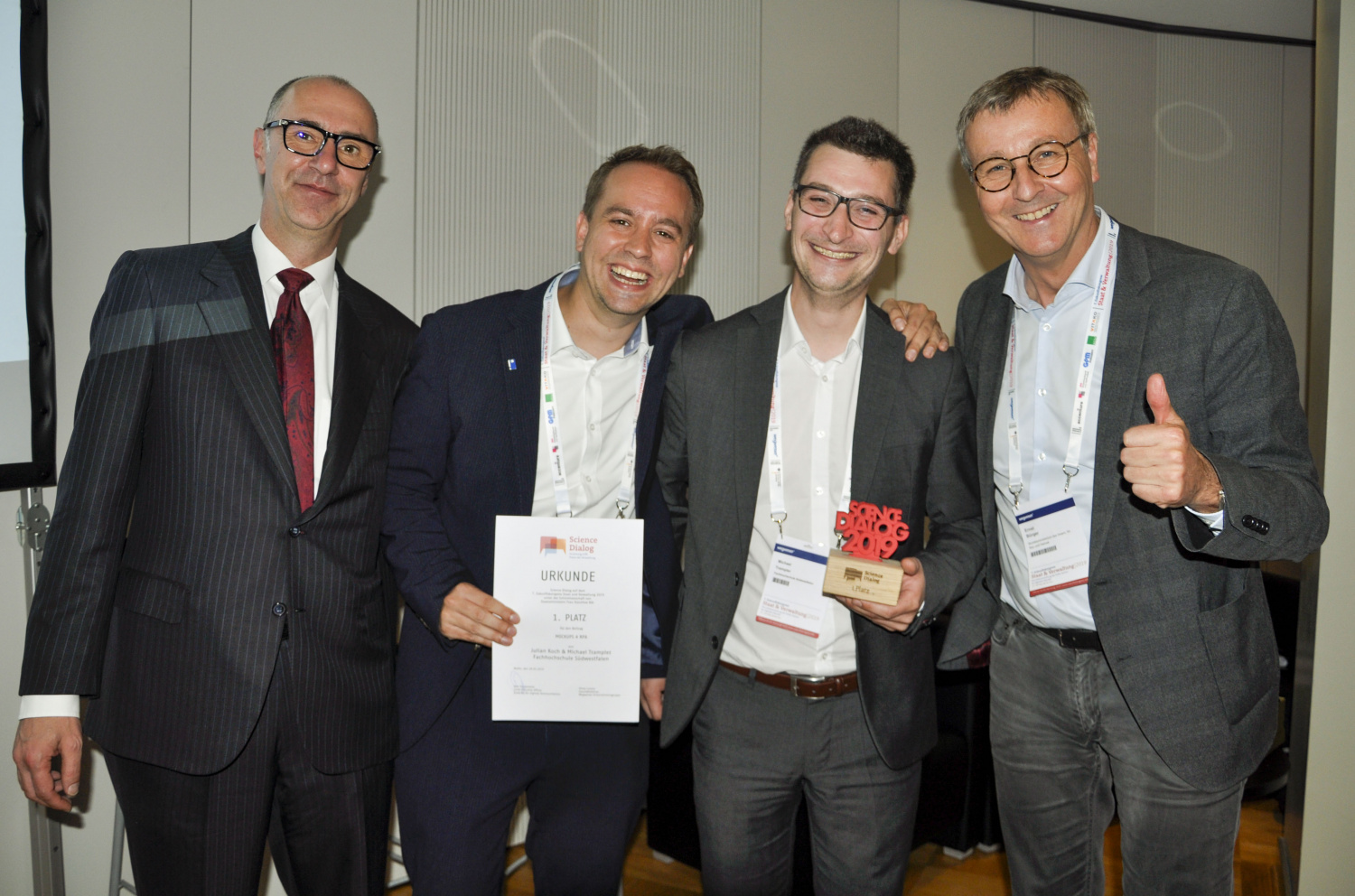
Mock-ups for Robotic Process Automation
The article by Julian Koch and Michael Trampler (South Westphalia University of Applied Sciences) aims to digitise and automate processes in public sector organisations with the help of software robots. Robotic Process Automation (RPA) makes it possible to replicate processes and then optimise them – without actually having access to the relevant applications and data in the production and operational environment. This means that the transformation can be achieved without large IT budgets and with comparatively little technical effort.
2nd prize
No-Stop-Shop: OZG 2.0 in 2027?
The article by Dian Balta (fortiss), Hendrik Scholta (University of Münster) and Michael Kolain (German Research Institute for Public Administration, Speyer) focuses on user-friendly services that do not require applications. Analytical tools and data-driven predictions enable the administration to anticipate whether a service is relevant to the public. The authority then provides the service without being asked.
3rd prize
The potential of AI-supported case management in social services
In his article, Dr Constantin Houy from the German Research Centre for Artificial Intelligence (DFKI) explores the potential applications of artificial intelligence in public administration. The potential of AI is examined using two scenarios in the social services sector involving high case numbers and large volumes of data: the procedure for determining severe disability and integration assistance.